How To Evaluate A Downtown Aspen Condo Purchase
July 2, 2026
July 2, 2026
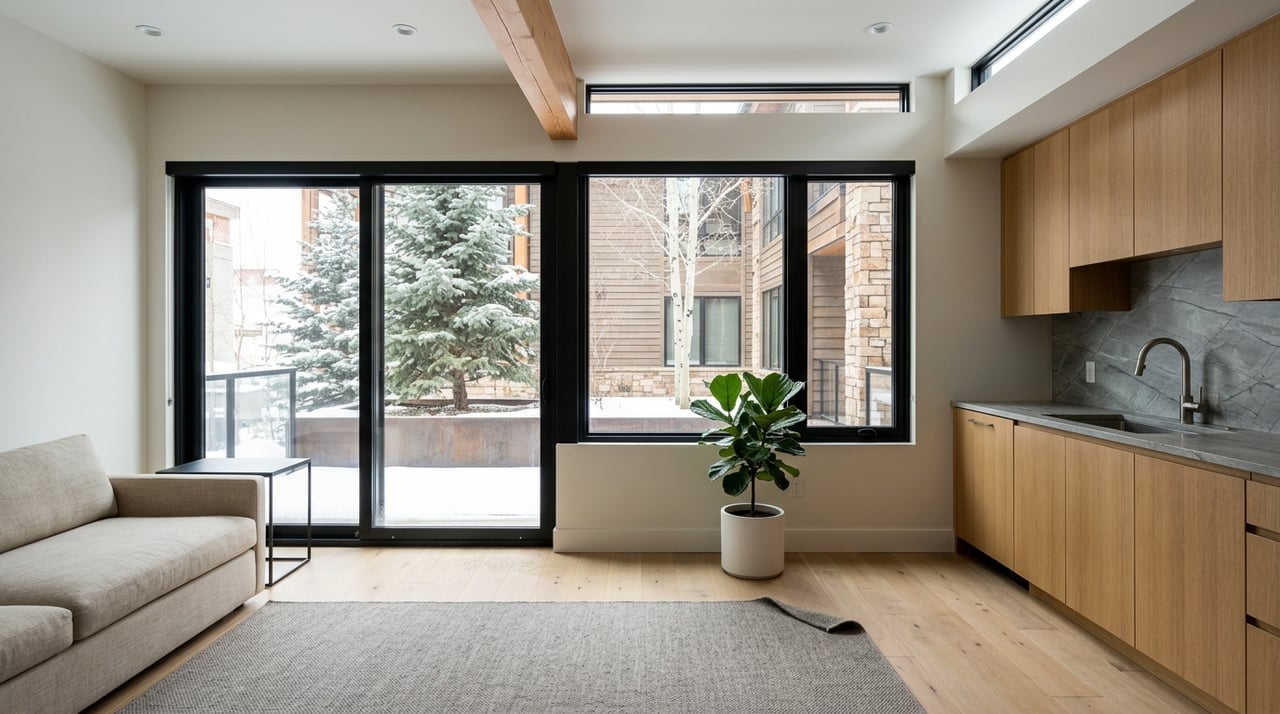
If you are thinking about buying a downtown Aspen condo, the unit itself is only part of the story. In Aspen, a beautiful interior can lose some of its shine if the building is hard to live in, the parking is frustrating, or the rental rules do not match your goals. The good news is that with the right evaluation framework, you can quickly tell which properties truly fit your lifestyle and which ones deserve a closer look. Let’s dive in.
In downtown Aspen, location is not just about an address on a map. It is about how easily you can move through daily life without relying heavily on a car. The City of Aspen actively promotes walking, biking, public transit, and carpooling, with options that include free shuttles, the Downtowner, RFTA, and WE-Cycle.
That matters because many downtown buyers want simple access to skiing, dining, events, and errands. A condo may be technically central, but the real question is whether it feels easy in practice. You want to picture yourself walking in winter boots, carrying skis, meeting friends for dinner, or heading to a concert without turning every outing into a logistics exercise.
Aspen Mountain is the town mountain, and the Silver Queen Gondola rises from downtown Aspen to the top in about 15 minutes. For many buyers, that connection is a major reason to focus on the downtown condo market in the first place.
Still, not every downtown location offers the same experience. When you evaluate a condo, think beyond the simple distance to the gondola. Ask whether the route feels comfortable in snow, with gear, during busy times, and after dark.
Downtown Aspen offers more than ski access. The Wheeler Opera House, Aspen Art Museum, Belly Up Aspen, and major Aspen Music Festival and School venues all help shape the appeal of owning in the core.
That cultural convenience can be a real value driver, especially if you use the property often or host guests. A condo that puts you close to the places you actually enjoy may feel more rewarding over time than one with slightly better finishes but less day-to-day ease.
Parking can change how a downtown condo feels to live in. Aspen’s downtown core parking is enforced from 10:00 a.m. to 6:00 p.m., has a 4-hour limit, and uses seasonal rates. The city also notes that its parking system is designed to reduce congestion, improve air quality, and preserve small-town character.
If a property depends on street parking or nearby public parking, do not assume it will be effortless. You should think through owner parking, guest parking, winter snow conditions, skier turnover, and how easy it will be to unload groceries, gear, or luggage.
A dedicated parking arrangement can be one of the most practical features in a downtown Aspen condo. If a unit has deeded parking, that may remove a meaningful layer of friction from ownership.
Guest parking matters too. If friends or family visit often, a building with no practical guest solution can become inconvenient quickly. In many cases, parking functionality matters more over time than an upgraded countertop or designer lighting package.
A downtown Aspen purchase is also a building decision. The age, design, governance, and operating structure of the property can all shape your ownership experience.
This is especially true in the downtown core, where older buildings may offer charm and prime placement but can also come with tighter rules, higher maintenance needs, or limited flexibility for future updates. Looking closely at the building can help you avoid expensive surprises later.
In Aspen, properties that are individually designated or located in historic districts are subject to Historic Preservation requirements. The city says exterior work, and some interior work, must be reviewed and approved before work begins.
That does not mean a historic property is a bad purchase. It simply means you should understand the implications. If you are considering updates, ask whether future work may require Historic Preservation review, building permits, or owner approvals.
You should ask about major projects already completed and any that may be coming next. Focus on items such as windows, HVAC, roof, exterior envelope, and common areas.
These details may not be glamorous, but they often shape both cost and comfort. A condo in a well-maintained building can support smoother ownership, while deferred maintenance may lead to larger expenses through dues increases or special assessments.
Unit livability often has more impact on satisfaction than finishes alone. As you compare properties, look at how the unit works in real life, not just how it photographs.
Useful questions include:
For a downtown Aspen condo, the HOA is part of the investment. Colorado Division of Real Estate guidance makes clear that buyers under contract are entitled to key HOA documents listed in Section 7 of the Colorado Contract to Buy and Sell, including governing and financial materials.
You should treat those documents as essential reading, not as paperwork to skim at the end. A strong location can be undermined by weak reserves, unclear rules, or repeated assessment pressure.
Start with the budget, dues history, reserve fund balance, and any pending or recent special assessments. Colorado guidance notes that associations can adopt budgets and collect assessments, while reserve funds are intended to cover major deferred expenses.
Also ask for the current reserve study and reserve-funding plan. Reserve planning has become more important in Colorado, and understanding the building’s preparation for major shared expenses can help you judge whether current dues are sustainable.
Meeting minutes often reveal what a summary sheet does not. Review at least the last year of minutes to look for recurring maintenance issues, owner disputes, insurance concerns, or discussions about future capital projects.
This step can give you a clearer sense of how the building is managed. It may also show whether the community feels proactive and organized or reactive and underfunded.
Colorado associations must maintain property insurance on common elements and commercial general liability insurance tied to the common elements. That is a strong starting point, but you still need to know what the master policy covers and what you would need to insure separately.
In an attached building, one issue can affect multiple units quickly. A clear understanding of the HOA’s policy and your own likely coverage needs is an important part of evaluating true carrying costs.
Many buyers like the idea of offsetting carrying costs with rentals, but downtown Aspen short-term rental potential is highly rule-dependent. You should never assume that two similar-looking condos have the same rental flexibility.
Within Aspen city limits, owners need a City of Aspen short-term rental permit. Outside city limits, the permit authority shifts to Pitkin County. That means your first question should always be where the property sits legally, not just how it is described in a listing.
Aspen’s city system includes three permit types: Lodging Exempt, Owner-Occupied, and Classic. Owner-Occupied permits apply to primary-residence owners and are limited to 120 nights per year. Classic permits apply to non-owner-occupied or owner-occupied residential properties, with no annual night cap, though zone caps and waitlists may apply.
Lodging Exempt applies to managers of lodge or condo-hotel properties. Importantly, individual owners in lodge or condo-hotel properties are not eligible for Lodging Exempt status and instead must follow Classic or Owner-Occupied rules.
This is one of the most important questions in the downtown condo market. A standard condo, lodge property, and condo-hotel may appear similar online, but they can create very different ownership and rental outcomes.
If a property is a lodge or condo-hotel, the operating model may function more like hospitality than a conventional condo association. You should confirm the legal type early so you can evaluate use, management, and rental expectations correctly.
Rental income should always be evaluated on a net basis, not a gross headline number. The City of Aspen states that short-term rental business licensees must file sales, lodging, and short-term rental excise taxes monthly.
That means rental performance depends on more than occupancy. Before you count on carry income, account for permit type, applicable taxes, licensing obligations, and any night limits or waitlist issues tied to the property.
Most downtown Aspen condo decisions come down to tradeoffs. The units closest to the gondola, pedestrian core, and entertainment corridor often offer the easiest access to skiing and culture, but they may also bring more foot traffic, parking friction, and noise.
Units a little farther from the busiest blocks may feel quieter and more private, though they can give up some immediacy and, in some cases, some rental appeal. The right choice depends on how you plan to use the property and what the next buyer is likely to value.
The most compelling downtown condos often combine a few practical strengths:
When several of those features come together, the property tends to make sense both emotionally and financially.
Before you move forward on a downtown Aspen condo, keep these questions in front of you:
Buying well in downtown Aspen is often less about finding the flashiest unit and more about identifying the condo that fits your version of Aspen life with the fewest compromises. If you want help pressure-testing a specific building, comparing downtown options, or understanding how location, HOA health, and rental rules interact, Hank Carter offers private, highly tailored guidance throughout Aspen and the Roaring Fork Valley.
Stay up to date on the latest real estate trends.
August 20, 2026
August 13, 2026
August 6, 2026
August 6, 2026

July 23, 2026
July 16, 2026
July 9, 2026
July 2, 2026
June 25, 2026
Aspen has no shortage of real estate agents. What it has a shortage of is agents who have been voted the best — three times — by the community they serve. When the stakes are this high and the market this complex, experience and trust aren't optional. They're everything. That's The Carter Group.